Projekt George MacDonald:
Der Glaube an einen Gott erschien mir immer logischer als die Annahme, alles sei aus einem geistlosen Nichts gekommen. In meinem Kinderglauben war es eine Selbstverständlichkeit, dass dieser Gott ein „lieber“ Gott ist. Die Ernsthaftigkeit kam erst später hinzu. Die Wahrheit wollte ich wissen. Der christliche Gott, wie er mir nahegebracht wurde, gab mir in meiner Jugend einen dringend benötigten Schutzraum und als junge Erwachsene ist man egoistisch und verbissen genug, um die vermeintlich einzig richtige Weise des Glaubens entdeckt zu haben.
Es ist mir eben nur das passiert, was vielen passiert, die sehr ernsthaft sein wollen mit ihrem Gott. Sie müssen feststellen, dass er ein lachender und tanzender Gott ist und die Sache gerade deshalb noch viel ernster ist als man gedacht hatte. Was wäre, wenn Gott dieses ganze Ding mit „liebe deinen Nächsten“ tatsächlich so gemeint hat? Wer einmal ernsthaft versucht hat, diesem Ideal zu entsprechen, muss unweigerlich über sich selbst lachen und weinen. Und Gott lacht und weint mit ihm. Erst dann, wenn man sich selbst und diese verflixte Ernsthaftigkeit aufgibt, kann man dem „lieben“ Gott der Kindertage wieder begegnen.
Wenn ich auf die letzten Jahre zurückblicke, erinnere ich mich an einen nicht näher bestimmbaren Zeitraum der Dunkelheit. Mir fehlte im Glauben echter Trost und wahnfreie Logik. Der offene Raum für Fragen, Rätsel, Staunen, Verzweiflung, Trauer, das gesamte Menschsein. Einen Schatten davon fand ich schließlich bei C. S. Lewis (1898 – 1963), der in gewissen Kreisen immer noch dogmatisch genug akzeptiert war, um meine Bewunderung für sein Denken und Argumentieren vor mir selbst zu rechtfertigen.
Ich weiß nicht genau, wann und wo, aber ich stieß bei meinen Recherchen auf die Aussage von C. S. Lewis, er habe kaum etwas geschrieben, ohne George MacDonald (1824 – 1905) dabei zu zitieren und dieser George MacDonald wäre sein Meister. Da ich Dinge, für die ich mich interessiere, beinahe zwanghaft in der Tiefe recherchiere, fand ich schnell heraus, dass diese Beziehung mit der Lektüre des „Phantastes“ (ein Märchen für Erwachsene, wie MacDonald es selbst bezeichnete) angefangen hatte. Ich besorgte mir eine englische Ausgabe dieses Werkes und verfiel dem Autor ebenso wie einst Mr. Lewis. Im Rückblick muss ich sagen, dass auch der „Phantastes“ nur ein Vorschatten dessen war, was MacDonald in seinen späteren Jahren schrieb und ich vertraute dem Rat von C. S. Lewis, der die Lektüre der „Unspoken Sermons“ empfahl.
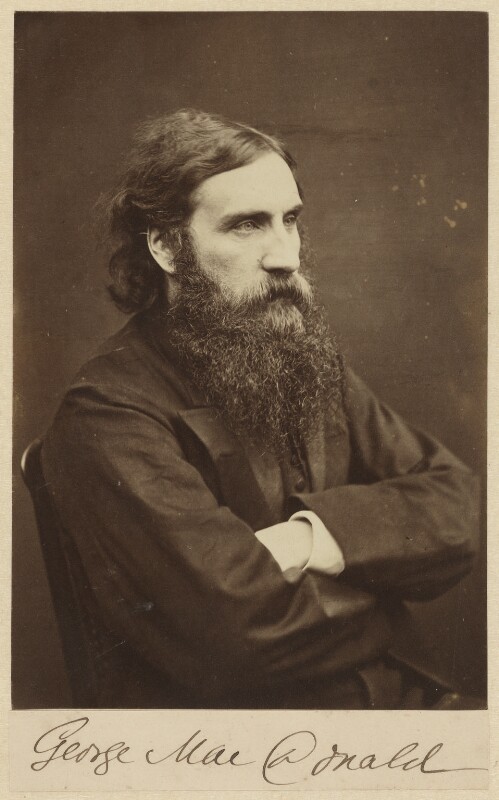
© National Portrait Gallery, London
Allein, es schien so gut wie unmöglich, an diese „Unspoken Sermons“ heranzukommen. Schon Lewis beschwerte sich zu seiner Zeit, dass es nur noch antiquarische Ausgaben dieser Predigtzyklen gab. Heute ist es nicht anders, eher schlimmer. Antiquarische Originalausgaben sind selten und unbezahlbar. Doch – den seltsamen Regeln unserer Welt sei Dank – ist Mr. MacDonald schon lange genug tot und sein gesamtes Werk findet sich digital eingelesen. Ja, auch das Internet kann ein Segen sein.
Ein fürchterlich schlechter Digitaldruck musste meine bildschirmgeplagten Augen entlasten. Der abartigen Qualität des Drucksatzes zum Trotz vertiefte ich mich in das umständlichere Englisch des 19. Jahrhunderts und las über Wochen nichts anderes. Es ist nicht sehr übertrieben, wenn ich sage, dass mein Glaube danach ein anderer war. Oder vielmehr der alte. Endlich traute ich mich zu dem zu stehen, was ich in der Zeit der Dunkelheit nur geahnt hatte.
Was ist, wenn der Kern des christlichen Glaubens ist, dass Gott tatsächlich vollkommen offenbart ist in Christus? Oder einfacher: dass Gott ist wie Christus. Ganz genauso. Nicht fundamentalistisch, sondern radikal. Radikal liebend, radikal vergebend, radikal anders und wild und für kein einziges unserer Systeme passend? Alle und alles einschließend, umarmend, nach Hause bringend, heilend, zum Ziel und zur Vollendung bringend? Was ist, wenn Gott tatsächlich so ist, wie ich ihn von Anfang an gedacht habe? Der „liebe“ Gott – ohne Abstriche. Groß, geheimnisvoll und selbstverständlich wie in meiner Kindheit.
Ich wollte diese Entdeckung teilen, diese Begeisterung. Aber es gab keine deutsche Übersetzung der Sermons. Hat sie nie gegeben. Im Internet fand ich eine sehr versteckte Seite, auf der jemand begonnen hatte, diese Predigten zu übersetzen, doch das Projekt abgebrochen hat. Stehlen kam absolut nicht in Frage, also blieb mir, die Texte selbst zu übersetzen, was ich in den letzten 5 Jahren auch mehr oder weniger regelmäßig getan habe.
Das vorläufige Ergebnis findet sich hier:
Auch den Zyklus „The Hope of the Gospel“ habe ich übersetzt. Geplant ist, „Miracles of our Lord“ ebenfalls zu bearbeiten. Doch den Kern der Theologie und was den Geist George MacDonalds bewegt hat, sein eigentliches Vermächtnis, sind die „Unspoken Sermons“. Mit dieser Meinung stehe ich nicht allein.
Ich stelle meine Übersetzungen öffentlich zur Verfügung, weil ich wie MacDonald dem „Meister dienen“ will, wie er es formuliert hätte. Ich bin überzeugt davon, dass die Sermons ein zeitloser Schatz sind und viel Heilsames in seinen Auslegungen liegt. Niemand muss mit allem übereinstimmen, was er schreibt – er ist und bleibt ein Mann des 19. Jahrhunderts. Aber der Geist der Texte – der Anspruch, die Liebe Gottes, die alles hervorgebracht hat, alles erhält und alles zur Vollendung bringen will, zu verdeutlichen und den Menschen auf ihrem Weg nach Hause zu helfen – der bleibt und mit dem stimme ich völlig überein.
Mensch, lass dich lieben. Komm nach Hause. Und liebe, wie du geliebt wirst.
Damals wie heute muss MacDonald vielen aufrechten Christen als Ketzer erscheinen. Aber wenn ketzerisch zu sein bedeutet, daran zu glauben, dass die Liebe alle einschließt und niemanden ausschließt, dann bin ich gerne ein Ketzer. Den Meister, Christus, hat man eben deshalb als Ketzer ans Kreuz gebracht. Dieses Geheimnis auszuforschen, dass die Liebe in ihrer absoluten Ohnmacht die mächtigste Kraft in dieser Welt ist, dazu regen die Sermons an und ich lade dazu ein, den verwinkelten Formulierungen des 19. Jahrhunderts eine Chance zu geben und diese Predigten auf sich wirken zu lassen.
Wer die drei Teile der Unspoken Sermons gerne als Druckversion lesen möchte, wird hier fündig.
***
Project George MacDonald:
Ever since I was a child, believing in God has been more logical to me than the preoccupation that everything came out of nothing into being. In my childhood faith it was natural to me that this God was a loving God, the „Dear God“-thing in childish prayers. The solemnity came much later. I wanted to know the Truth. The Christian God as I learned him gave me the necessary confidence in my teenage years and as a young adult you are selfish enough to be sure of the one and only „true“ faith.
Then happened to me what many experience who want to be the most serious with their God. They have to acknowledge He is a laughing and dancing God and just because of that this God-thing is even more serious as they´ve been aware of. What if God meant what He said when He said „Love thy neighbour“? Who once tried to live up to this ideal must laugh at oneself and shed tears about oneself. And God laughes and cries with him or her. Only when you come to the point of giving up this rotten solemnity you´re able to meet with this „Dear God“ of your childhood once again.
As I look back on the last years I remember an uncertain period of time full of inner darkness. My faith lacked true consolation and logic without delusion. The open space for questioning, riddling, wonder, awe, desperation, grief – the whole range of human existance. A shadow of this was to be found at C. S. Lewis (1898 – 1963) who was still that much accepted in certain dogmatic circles of christian churches to justify my admiration for his thinking and writing.
I don´t know exactly when or where I came to C. S. Lewis´s statement that he hardly ever wrote a thing without quoting George MacDonald (1824 – 1905) and that he regarded this MacDonald as his Master. This caught my attention and I started to do my obsessive research as I always do with things which are of interest to me. I soon found out that this special relationship had begun with Lewis reading MacDonald´s „Phantastes“ – a fairy tale for adults (more exactly: „a fairy romance for men and women“) as he himself stated it. I bought an English edition of this novel and immediately got hooked. In looking back I must say that „Phantastes“ gave me a foreshadow only of what George MacDonald created in his later works, and I trusted C. S. Lewis in his recommendation to read the „Unspoken Sermons“.
Well, it seemed as good as impossible to get hold of a copy of these „Unspoken Sermons“. In his lifetime C. S. Lewis already mentioned that there were only antiquarian books of the three series to get. Today it is even worse. Original editions are very rare and quite expensive. But thanks to the strange world we live in there are digital copies to be found. Yes, even the world wide web can be a blessing from God.
I got a really horrible print of this digital texts for relieving my screen-tired eyes. Although the texts were arranged in the ugliest way possible I dived deep into the 19th century English and for weeks on read nothing else. I´m not exaggerating when I state that my faith was a changed one afterwards. Or rather it was the old one renewed to me. Finally I dared to believe what I only guessed through the time of my inner darkness.
What if the core of the Christian faith is: God totally revealed in Christ? Or more simple: God being like Christ. Exactly like him. Not fanatically but radically. Radically loving, radically forgiving, radically different, and wild, and not fitting into any of our systems? Including everybody and everything, God being all in all. Embracing, taking home, healing, bringing the world to the good end and fulfillment. The radical redemption. What if God really is how I thought of Him in the beginning? The „dear God“ of my childhood prayers – big, mysterious and natural like breathing.
Ich wished to share this striking experience with others, but there were no German translations of the „Unspoken Sermons“. There never had been any translations of them as far as I came to know. I found a quite hidden website where someone had begun to translate the sermons but he soon broke up with it. To steal this work for showing it to friends was out of question, therefore I had no other choice but to translate the texts myself. I have dedicated myself to this task for five years now.
Here you can find what I finished so far:
I also translated the series „The Hope of the Gospel“ lately. I plan to work on „Miracles of our Lord“ soon. But core and essence of George MacDonald´s theology is most to be found in his „Unspoken Sermons“. Here his spirit talks to us most vivid, it is a kind of legacy he has left for us to discover and make use of it. I´m not the only one to hold this opinion.
I make the texts publicly available for everyone, because like MacDonald I want to serve my „Master“ as he would have put it. I´m convinced that the Sermons are a timeless treasure and that they contain much healing potential for any soul wandering through certain darknesses of their faith in God. Nobody has to agree with him in every detail of his writings. He clearly is a man of the 19th century, time changes some circumstances in this world. But the spirit of these Sermons – their claim to show the Love of God, the Love which brought forth everything that is, sustains everything that is, and brings to fulfillment everything that is – this claim remains, to bring home the human being to it´s source – and in this I fully agree with him.
Human, let yourself be loved. Come home. And love as you are loved by Love.
As well in his own time as today George MacDonald must seem a heretic to many socalled upright Christians. But if being a heretic means to believe that Love includes everyone and excludes no one – then I really like to be a heretic. The Master, Christ, was nailed to the cross for the same reason. To explore this secret – that Love in it´s absolute fainting and powerlessness is the greatest power in this world – these Sermons encourage the wandering soul. I invite you to give a chance to these 19th century texts with their sometimes roundabout way to express things. Let the core of their content sink into your heart.
 beatricegriguhn